Ayurveda and Disordered Eating
AHARA: The Ayurvedic Perspective on your relationship with Food
For Ayurvedic stories, tips, and teachings delivered straight to your inbox, grab a spot on our newsletter list.
I used to binge eat peanut butter cups Reader.
I'd buy the bags of mini ones (up to 10 bags at a time if they were on sale).
I'd have bags of them stored everywhere: at my desk, in the glovebox in my car, in the garage deep freeze.
... even under my bed.
I hid them and stuffed them in my cheeks like a chipmunk when no one was looking.
It was common (pretty much daily) for me to eat a whole bag in a sitting.
And not in an "I'm enjoying this" way.
In a disassociate and stuff my face way.
They were my "mother's little helper" - calling to me from their golden metallic wrappers, promising a moment of bliss in my otherwise overwhelming day.
Ayurveda stands on three pillars of health.
The first pillar: AHARA
Also known as your relationship with food.
And my relationship with food has been a rocky one.
I was a '90s latchkey kid. A product of divorce in the suburbs of Toronto. My parents had long commutes, so I grew up on those microwave dinners with the brownie with the chewy edges.
Breakfast was toast with margarine, cinnamon, and brown sugar, or Rice Krispies sprinkled with white sugar.
My dad picked me up every second weekend, swinging by the convenience store to load up on snacks we'd eat while watching Nightmare on Elm Street movies.
When someone bullied me at school, my mom would take me out for a special treat.
It was our love language. (maybe you can relate)
And, it became the way I loved myself in adulthood, too.
When we think about food today, it's easy to go straight to diet talk - and all the shame, binge-and-restrict, and pb-cup-hiding that goes along with it.
... but why don't we talk about our relationship with food? And how it's not so easy to just "stop eating peanut butter cups"?
Ayurveda can give you a detailed list of exactly what to eat based on your dosha/constitution, or the season that you're in.
In fact, here’s a list of recommended foods for summer:
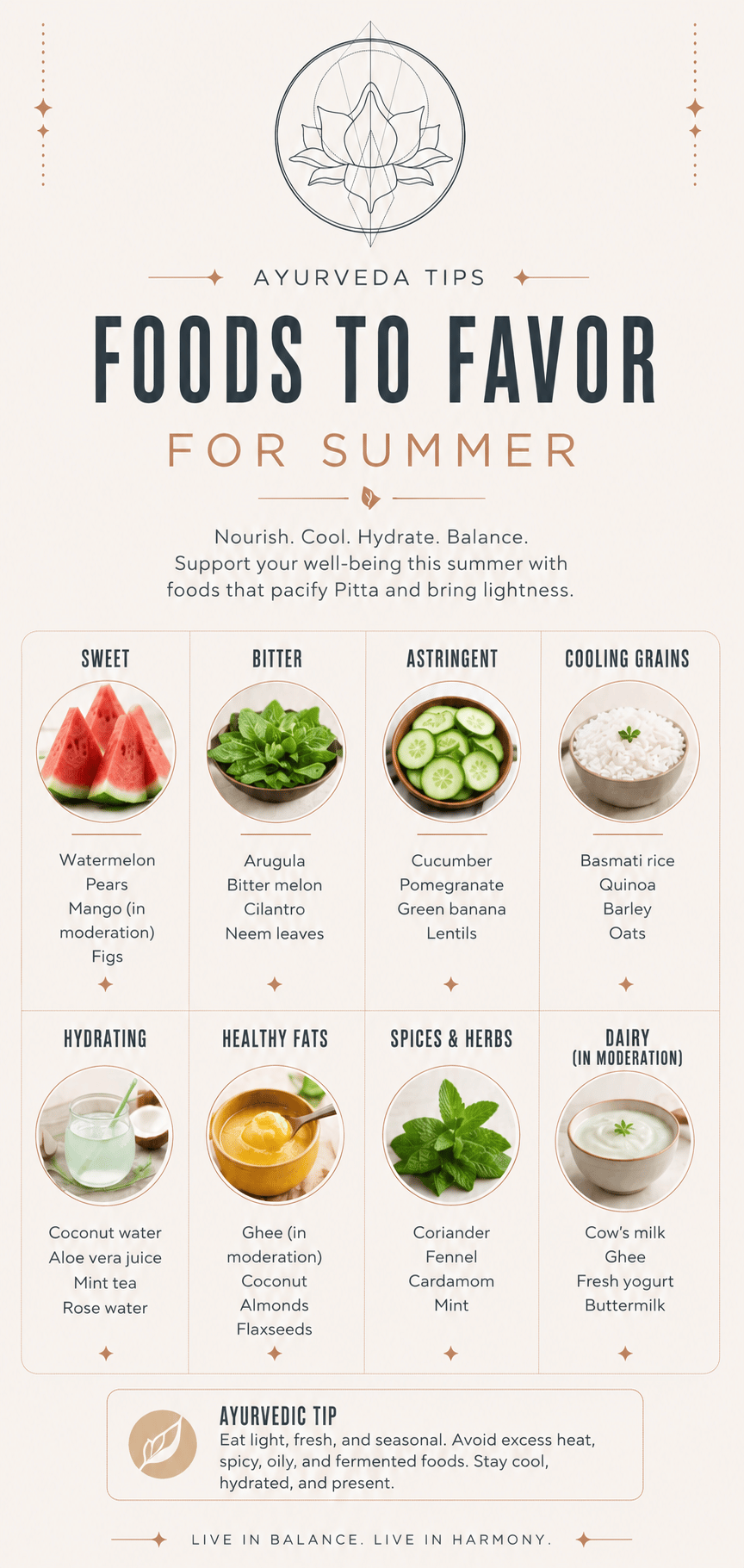
I can tell you that many health & wellness professionals have handed me a list like this.
.... I can also tell you that I have never strictly followed it (probably because peanut butter cups aren't ever on it).
But here's what I like about it:
Ayurveda says, "Here, based on what's going on in your body (or the environment around you) right now, these foods would be good to add."
We add in rather than restrict.
And when it comes to "junk food", we don't restrict. We get curious.
Access ALL Habit Ayurveda Programs and protocols, plus 24/7 Support

Before telling you to "Stop eating peanut butter cups", an Ayurvedic Practitioner would be more likely to tell you to:
Start having your cups right after lunch, so the sugar metabolizes easier, and you have time to digest it before sleep
Practice assuring yourself that "cup time is coming" at the chosen time, so you don't feel restrictive, you're just being intentional
Have your cups outside, or by a window in a relaxing chair. Give yourself presence and space to fully enjoy them
Close your eyes with each bite and savor it
Start to notice when the desire for cups goes beyond a sugar craving - like it's filling a need for comfort. Start to think about other ways you can give yourself comfort
After a lifetime of comfort sugar eating,
followed by over a decade of diet mentality and binge-and-restriction,
This is what healed my relationship with food.
Reader, I'd rather see you sitting on a sunny patio, listening to good tunes with your friends and eating a massive piece of chocolate cake for breakfast than see you cramming a protein bar in your face in the car on your way to work.
We think we need to cut out all the tasty food.
We think we need to get super specific or follow some detailed protocol.
But maybe all we need is to learn to use food for what it's meant for.
Ayurveda teaches that we eat for nourishment,
we eat for medicine,
and we eat for celebration.
In between, we learn to feel our feelings instead of pushing them down with food.
And it's SO FREAKING FREEEING, because now I still eat pb cups, but I'm cool with just one or two,
I don't hide them or feel shameful about them,
And I treat them like a treat, not a crutch.
Here are some more interesting questions to ask yourself about your diet - that AREN'T ABOUT FOOD:
WHEN ARE YOU EATING?
What time of day are you eating your largest meal?
Are you going to sleep with a full stomach, and waking up groggy?
Through the week, are you eating at all different times of day, or are meal times consistent?
Are you grazing? How much energy is being used up constantly digesting?
HOW PRESENT ARE YOU FOR YOUR MEALS?
Are you watching tv or scrolling on your phone while eating?
Do you take time to look at your food, smell your food before taking a bite?
Do you chew?
Do you think about your food while you're eating it?
Meal spacing and eating undistracted are HUGE in Ayurveda! Before you go on another diet, it might be worthwhile to just test different timing with the food you're currently eating, and just give yourself a time-out for meals. I go further into these topics in the Ayurvedic Guide to Fasting, and Module 1 of Everyday Ayurveda. You can access both inside the Practical Ayurveda membership, along with plenty of practices for comforting and loving on yourself without snacks. (already a member? Log back in here)
Happy eating :)


Ayurveda stands on three pillars of health.
The first pillar: AHARA
Also known as your relationship with food.
And my relationship with food has been a rocky one.